

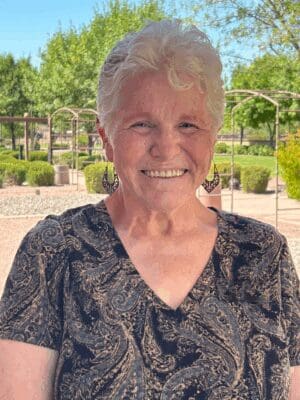
Click HERE to view Rev. Beci’s guided meditation during the service.
Again, I’m Rev. Becky Rohkohl, and tonight we’re going to finish up the book that they’ve been running on here for three Wednesdays in a row, “The Four Agreements.” Has anybody been here for all three? All of them! Yeah; there you go. All right. So, you guys got your homework done, right? No, there wasn’t any homework.
So, you know all that we’re going to come up to, and then I’ll go on from there. So, I’m just going to recap first. The first one was being impeccable with your word. We know at Unity words have power, right? And being impeccable with your word is also like Florence Scovel Shinn says: “Your word is your wand.” Right? Our words mean something. Someone said that’s why they call it spelling, because it spells with words; that they cast spells on people.
The next was don’t take anything personal. Mel Robbins says this. She’s a coach. She says, “How others treat you is a reflection of them, and how you react is a reflection of you.” How do you want to react, right? Because the whole world’s going to reflect to us whatever they want to, but how do we react to that?
And then it was don’t make assumptions. Albert Einstein says this about assumptions: “Assumptions are made, and most assumptions are wrong.” Very simple man, right? Most assumptions, all right.
So, we’re back to ALWAYS DO YOUR BEST. And over the past few weeks, you’ve been exploring all the different ones. And we got to this chapter. It’s supposed to be Chapter #4, but there’s actually a couple chapters after that that I also want to talk about, too, to round out the book. Because I feel like always doing your best encompasses those, as well. It’s like pieces of how we do our best. So, I’m going to do my best to convey that to you. All right.
So … doing your best is the final agreement. And I want to remind you there’s a distinction between doing your best and being perfect. People think perfection is your best, and it’s not, right? It’s about giving it your all in the moment and releasing the rest of it – letting it go. “I did the best that I could right here, right now.”
And our best is not perfection. Our best is a sacred expression of who we are in this moment when we remember our divine nature. When I remember who I am, and I’m in this moment, and I give my best, that is doing my best. Not someone else’s best; your best, rooted in presence, honesty and love.
And like everybody else, our best changes from minute to minute, right? It can. I could walk out there if something happened and my best might completely change. My best on my worst day is a lot different than my best on my best day. Right? It’s going to change. And the more I learn, the more I grow, my best also changes with that. And it grows and it encompasses more things because I’ve learned more. And I know more about myself and about what I will and won’t accept in my life. Your best is going to change.
Now, exhaustion doesn’t give you the best. And we live in a tired world, don’t we? Don’t you feel like everybody’s like, “If I could just catch up. You know, I’m so tired.” I see people sometimes when I’m in the stores or something, and their face looks like they just have been awake for days.
And you’re like, “Are you okay?”
“Yeah, I’m having a hard time sleeping” or “This is stress” or “That is stress.” Everything’s a big stress ball.
So, when we’re in exhaustion or living from this tiredness, it’s really hard to give our best. It’s really hard to step into that. So, in that moment, your best may be all that you have right there. Give that. And it will change when you start feeling less exhausted.
So, in the Unity framing, it is all about our divine identity, our self-compassion, and our spiritual practice, rather than performance. Practice, not performance. I’m doing the best …
When my oldest granddaughter was little, all the big boys were climbing the trees. And she’s like, “I want to climb a tree, Grandma.” And she was like seven years old. It was a pretty high tree. “I’m never going to get up there.”
I said, “Well, we’ve got to start with practicing.” So I put my knee down and let her get up there. That was the best she could do. She had to have that knee to jump up there. And then before you know it, I’m just going like that. And then before you know it, I step away. Because, as she’s learning, her best is changing. She’s growing and she’s understanding.
And remember that doing your best isn’t about achieving things. It’s not about my master’s or my bachelor’s or somebody’s doctorate. That’s not the best we’re talking about. We’re talking about in your divinity; in your spiritual practice. And to remind yourself that Spirit never asks you to prove your worthiness.
You know, I didn’t know that for the longest time. I grew up in a very different kind of household, nothing anywhere near like this. And my explained and understanding of God was he was this big guy in the sky with s big beard and he was watching everything I did. And when I didn’t toe the line, I was going to get in trouble. And I got in trouble a lot! And I kept thinking, “How can I not be toying the line? I’m eight years old. You know, I’m doing what they tell me to do!” But still it seemed like I was still in trouble all the time.
Because I thought, “Okay, well, if I just do better; if I get really good grades” — and I got good grades in school; my brothers didn’t. My older brothers, they didn’t have to get good grades. I did all the chores around the house like I was supposed to. I followed my mom around like every little old-school girl does. You know, “Oh, what do you need? What do you need? What do you need?” And I kept thinking, “This is how I’m going to get my reward. This is how I’m going to prove my worthiness. This is how I show her that I’m the best.”
But Spirit doesn’t ask us to prove that worthiness. We don’t have to agree to achieve something for it to be our best. We’ve just got to be in alignment with our truth. To be in alignment with our spirit: with our Christ light inside us. To align to that and stay with it and be true to it.
Has anybody ever here thought they were doing their best and somebody came along — oh, a partner or whatever. I’m throwing myself under the bus here, just in case you’re wondering. And all of a sudden my best changes because they need this. You know what I mean? It’s just like, “Oh, well, I can only be this much. I can’t let my light shine, because their light has to be bigger than mine, brighter than mine. So I can’t really do my best because I’m going to cater to this.”
That’s still not doing my best. I was bringing myself down and holding myself back because I was in fear that this person would leave. And, you know, they did when I started shining my bright. But that was because they were supposed to. Not because I wasn’t shining my light, but because they really didn’t need to be in that place.
So, I’ve spent a lot of time, like I said, in my past trying to prove my worthiness. And I worked for, I would say, decades. I’m an old lady. See the silver hair? Trying to make a difference in someone else’s life; do something for other people; try to achieve things; try to get somewhere so that I could go, “Yeah, okay, I’m at my best now. I’m good.” And it’s empty, because that’s not the best that Spirit’s looking for. It didn’t make a difference now.
And I ran myself ragged. Does anybody else run themselves ragged for this? I’m the only one up here. There’s got to be somebody in there that just tried so hard for everybody else, and gave so much of yourself trying to keep everything to the standard just to prove that I was worthy.
So, in Unity, we’re reminded that it’s about remembering and realigning. We don’t have to earn the divine love through performance. Even though our ego tells us, “Do more and you’ll be worthy; work harder, try harder, get more stuff; we’ll get there.”
Back in the day, when I was a kid, it was always “keeping up with the Joneses.” Does anybody remember that? You have to have what the people next door had. If they had two trucks, you had to have two trucks. If they had a boat, you had to have a boat. If they had a pool, you had to have a pool. Because we were keeping up. Because that made us worthy. That made us the best in the neighborhood. We looked good for everybody else.
Spirit says, “You are worthy. Now, let your actions flow from that knowing.” You already are worthy. Act like it! Right? BE that worthy out in the world. Because other people need to see that worthy. Believe it or not, there are people out there that are still struggling really hard, not knowing that they’re worthy.
And at Unity, we at least have the understanding and the truth behind us that we know our worthiness and we can carry ours out. And we can shine it and other people can go, “Wow, what is that? They’re different.” I get that all the time. I don’t know if you guys do. “You’re different.”
I am! Took me decades to get here, but I am different. Because I know my worth now and I know my worthiness. And when I go out into the world, I don’t bring it down so that I don’t outshine anybody else. I figure if I’m shining, God wants me to shine, and it will attract whoever needs to be attracted to that. And they’ll understand their worthiness, as well.
So, some just practical examples of doing your best is a parent doing their best. You know, sometimes I don’t … Some of you probably don’t know. I’m a custodial grandmother. I still have four granddaughters that live at home. And we took custody about ten-and-a-half years ago of these kids. There were five of them at the time. And three of them are still underage. One of them, I’m ready to … She just graduated, and I’m like … But I love them. I love them all.
But sometimes my best is going to my room and telling them, “You guys, you’ve got dinner. That’s all I got today.” That’s my best! Because I know for me to stay down there and to be argumentative or to fight that, it’s just going to be more harmful and more hurtful for everybody else. So, I’m just like, “Okay, I’ll excuse myself. You guys go do what you got to do.”
Sometimes they do that, too. Sometimes you wouldn’t know anybody else is in the house from the room that that person’s in. I’ll be in my room. I can’t tell anybody else is in the house. It’s so quiet. And when she’s in her room, it’s the same way because they’re all in separate rooms. It’s like, “Is there anybody here?” The dog goes from room to room looking for people — the dog and the cat. But we’re doing our best in that moment. Sometimes it’s together and sometimes it’s not.
And sometimes when people are healing for grief, they’re doing the best that they can. And when we come up alongside them and say, “Oh, it’ll be okay,” we’re not supporting them in that grief, right? We let them be their best. And if that means they’re sitting there on the curb in the dark and they’re crying, we sit there with them and let them cry. And sometimes I cry with them, because tears are cleansing.
So, it’s remembering to put on your own oxygen mask first; is doing your best. Because we want to save. We’re healers. We want help everybody. We want to heal them. We don’t want people to suffer. If we don’t have enough oxygen in ourselves, we can’t help them.
And it’s showing up imperfectly, yet sincerely. I am never going to be perfect. I am a work in progress. And I will tell you that probably on my deathbed. I’m still working on it. I’m still trying to get there. But I will show up for you. I will be there, and I will sit and I will work with you. And I will hold your hand with all my heart.
And sometimes your best is choosing kindness and stopping self-attack. How many of us turn on ourselves when things happen? You look in the mirror, “Oh God, if I just stop eating so much!” And then all the little self-talk going on. Choose kindness for yourself as well, not just for the people out there. We’ve got to do it for ourselves.
So that’s what they’re talking about when they’re talking about doing the best.
Now, there’s two more chapters in this that kind of go along and help us work on doing our best. And the first one is about old agreements. Anybody know they’ve made agreements their whole life? And spiritually, I’ve been told — you might ask some other teachers here — that you made agreements before you got here.
One of my friends sat me down a long time ago and said, “You know, you agreed to be this person.”
I said, “I don’t know what the heck I was thinking! Because I wouldn’t have done that to somebody I didn’t like, but okay … If I agreed, then I agreed!”
So, we’re making agreements all the time. And everyone carries these invisible agreements with them. You need to behave this way with that person. You do this for that person. Anything: you have the consciousness. Whatever it is.
So doing your best becomes difficult when you’re still living under agreements you never consciously made. Agreements that were born out of fear, shame, survival or conditioning — those aren’t ours. That’s why part of the meditation was let them go. They’re not ours. We never agreed to carry them. They’re there, so we’ve got to learn to let them go.
Examples of those: “I am not enough.” The chatterbox in my ear is my mom saying, “Who do you think you are?” It took me a long time to let go of that one: Who do you think you are? Now when I see people say it, I turn around and I’m like, “I’ll tell you who I am!” Like, I know who I am! They’re not saying it to me, but I hear the phrase.
And “I must earn love” is another one. “My value depends on my productivity.” I didn’t even know I lived in that one for a long time, because I used to be in the IT field, and everything was about getting it done. I even aspired to work for IBM and I actually made it. I was like, “I made it! I did it!” And the job nearly drove me crazy. I was a critical incident manager and everything was a crisis … and if everything’s a crisis your life gets turned upside down. Especially for me. I couldn’t do it.
Or “I have to keep everyone happy. That’s an agreement.” “I have to keep the peace.” Whose peace are we keeping? “I have to keep it.” No, you don’t! You have to be your best. You have to do what’s best for you.
So, this has been like a lot of collective conditioning from — you know, we got it from our family. We got it from religion. We got it from culture. We got it from childhood wounds. And it’s all fear-based thinking. It’s all fear-based. And we made these agreements unconsciously.
So. at Unity, we understand that spiritual growth allows us to consciously choose again. We do not have to carry this. We do not have to carry any of it. Transformation begins in the consciousness. When consciousness changes, life changes.
We hear that. I know you hear that when you’re here on Sundays. I know you hear that when Rev. Stacy’s up here — or any one of us; Rev. Jimmie; any of them. It changes when we change our minds and our thoughts about it.
The truth of the whole matter is: we were never damaged and we were never meant to carry into this. And people have a hard time letting go of the suffering, because it’s really difficult to know what will happen versus this. I don’t know what’s going to happen over here. To let go of that certainty — even if it’s painful. To let go of that certainty to walk into something that’s uncertain can be very hard. And people will hold on to that.
So, breaking these long-standing agreements involves awareness. Just noticing them. “Oh, wow, that popped up. What was that?” You know?
Forgiveness. That’s a big one. People go, “I have a hard time forgiving.” I get it. I had a hard time forgiving for a long time, too. Just be willing to forgive for now. Be willing, and it’ll come to you.
Denials and affirmations and consciously choosing again. Anytime it comes up — anytime you catch yourself in the act of not being your best self — choose again. Choose again. Stop what you’re doing. Choose again.
Unity does not teach that we are sinners trying to become spiritual teachers. Spiritual. It teaches us that we are spiritual beings remembering who we really are.
So, when we learn to release, renew, reclaim and awake — and in this process — that gives us the best version of ourselves. It’ll set us up for success in any space that we’re in.
So, there’s this thing that I do. I don’t think I enough time to do it. I’ll just give you a really brief version and you don’t have to do it. This is something I practice with some of the women I work with. It’s a meditation. I have them close their eyes. It’s really long, so I’m going to give you a real brief version. And I have them get really deep into meditation.
And then I have them imagine themselves in a dark room that is immediately filled with light all around them. It’s warm; it’s comfortable; it’s safe. But in this bright light, they see all these cords going from them out — out into nowhere, out into all this stuff, right? Just around them, attached to them, wherever they are.
But when they notice these cords, what they see is: some of the cords are pulsing and alive and vibrant. It’s like the energy’s flowing back and forth and back and forth. And you could feel the pulse of it. And then some of the cords are harder and, you know, you could feel that they’re not flexible anymore. And they’re more tugging at you. They’re tugging at you, right?
So, I go through this whole thing with them for like 20 minutes. And I say now you have some golden scissors in front of you. And every one of those cords that’s tugging at you you’re going to cut it away. But before you cut it away, you’re going to say, “Thank you for serving your purpose. God bless you.” And cut it away.
And then I bring … I have them go through the whole process, however long it takes them to do it. And then I bring them back out of it. And I have not had one person yet who said that didn’t lift a huge weight off their life.
So, find some kind of practice like that where you can tell yourself, “I am here and I’m going to let this go.” Whether you use a meditation like that or whatever it is you do — maybe yoga. Whatever practice you have, do it. Get in there and tell these old agreements, “It’s time to go. I don’t agree with you anymore, and I’ve changed my mind.”
Because when you live from the knowledge of consciousness, you can make new agreements. You get rid of these old ones; you can make new ones. And they can be pulsing and powerful. And they can bring life to you and bring life to the people around you. And they can empower you. And they can help you to — the last chapter — create heaven on earth.
Create heaven on earth. Heaven is not merely a destination after death. It’s a consciousness available right now. This is what Charles Fillmore says about it: “Heaven is the condition to be brought about in all affairs of men here on earth. It is to grow from small beginnings like a mustard seed or a yeast cake. His disciples were sent forth to sow the seeds in a definite way by carrying into the midst of men the signs that evidence the power of Spirit, through which the kingdom of heaven is to be established right here on earth.”
Heaven on earth looks like responding instead of reacting; resting without guilt; forgiving ourselves; blessing ourselves and others; trusting Spirit even if you’re uncertain. If you feel like it’s hard to let go of that, trust that Spirit has you.
You’re wanting for yourselves what you want for others. You know, it’s really easy to say, “Oh, my best friend called and I told her all this stuff!” And then you go, “Okay, but do you do that? Oh, wait; yeah, I guess I could do that for myself.” So, you know what I mean? It’s easy to see it out here, but do I turn it around and give it to myself? Give it to yourself, as well. That’s how you consciously bring heaven to earth, on earth. And heaven on earth helps us to live into our best selves.
So, what we learned over the whole time of the book is: heaven on earth emerges when thoughts align with truth; the heart opens up; fear loosens up; love becomes embodied; and heaven on earth is not perfection around us — It’s a peace within us that changes how we meet the world.
The whole book boils down to these truths up here on this thing right now:
-We speak with dignity.
-We stop personalizing.
-We release assumptions.
– And we do our best.
-We let go of the suffering.
And that’s how we get to heaven on earth.
So, I’m going to leave you with this right here. Every day we’re making agreements. Every day we’re going through these steps. Do you want to make your agreements rooted in fear or in truth? Unconscious or conscious? Think about that when you make these decisions; when these agreements come up. Choose wisely.
And remember the affirmation: “When I do my best, I create peace within myself and harmony around me.”
And perhaps doing our best simply means this: showing up fully, present to life; remembering who we are; and allowing love to have the last word. My friends, much love.