

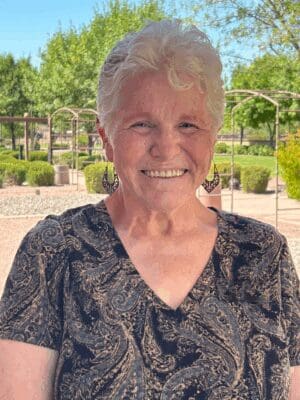
Click HERE to view Rev. Stacy Macris Ros’ guided meditation during the service.
Okay, Hi, everybody! How are you? Good to see you at 11 o’clock on a Sunday. Usually I’m tucked away in my little hole, so I’m glad to be here with you guys.
I want to talk to you about a book I read. And before I start, I was sitting there thinking I needed to tell you the secret. I have the secret about the talk, but it’s like … As I’m sitting there, I’m trying to talk myself out of it, because I don’t want to spoil the ending. So, I’m going to wait, and we’ll talk about that in a minute.
First, we’re going to talk about Bob Goff, G-O-F-F. This is Bob. Has anybody read any of his books? Anybody know him as an author? All right, here we go. “Love Does.” “Everybody Always.” I love his books, absolutely. He is the master storyteller. I mean, his books are just — the stories that he tells are just amazing in there.
So, I’m going to tell you two chapters out of his book. I’m not going to tell him as well as he did, because I’m not the master storyteller, and I have 20 minutes. Okay? [Congregants laugh] But I am going to do my best to share with you how to love everybody always. I keep hearing ringing.
So, he’s a lawyer as well as a master storyteller. He actually is a diplomat to Uganda, as well. And he travels back and forth. He’s a New York Times top 10 best-selling author, as well. I mean, he’s just on all this stuff behind his name, and just amazing kind of guy.
But he travels back and forth a lot with this cohort of his to go back and forth to this village in Uganda. And they were working on building a school. At the time of this book, they were working on building a school back there in Uganda for this village. And he really fell in love with the people there — fell in love with the children all around. They wanted to help bring these children up; help make their lives better.
But I don’t know if you know, but back there in Uganda — at least in this village — the witch doctors were the ones that had all the power. They actually said who did what. I mean, it’s like they ruled everything. They were even — you were more afraid of the witch doctor than you were of the police in this particular village.
So, our first chapter is about said witch doctor. His name is Kabi. And in this area — and I don’t know if it’s true of all the areas — but in this area, they had this ritual of when the witch doctors needed certain things, they would go and get them. One of the things was they would kidnap small children, and they would take pieces from them to use in their rituals.
Now, this left the children to die in the desert, and they were never recovered. And this was just too much for Bob and this cohort. They’re like, “We’ve got to find a way.” They tried talking to the witch doctors. They tried, you know, just being, “Hey, let’s, you know, let’s stop what we’re doing here!” But the request for the services that used those particular parts was so high, they’re like, “Okay; well, we’re going to keep doing what we’re doing.”
And so, he had to find a way to stop it. And there were just too many children. dying because of it. So, he decides that, if he can find somebody and they can witness this. And then one day, a little boy walked back into the village. Kabi had taken him out and done his thing; thought the child was dead, and he wasn’t. We’ll call him Charlie. Charlie wandered back into the village. His family shunned him because they knew what the witch doctor had done, and they were very fearful of the witch doctor. They were afraid he was going to come and retaliate for them.
Charlie got medical help. He was okay. They took him back — Bob and people took him back and forth to the hospital; got him on his feet. And then Bob was just like, “Do you think, Charlie …” — Charlie was about eight years old at the time – “Do you think that you can testify against Kabi?”
And he said, “Yes.”
He goes, “We have to stop this somehow.” So in an effort to get some kind of justice going around there, he starts this campaign to get a trial for Kabi.
First of all, he couldn’t find a policeman that would go and arrest him. I mean, they were just too fearful. They had all the power, and they were afraid they were going to curse their family. They were going to do all these things to them. You know, people wind up missing, and nobody knows where they go. So, they were very afraid.
So finally, they did get somebody — a man that went out there and served him and handcuffed him and brought him in and brought him into the jail. And then Bob and his cohort had to go … Because Bob’s a lawyer, he did the trial himself, but they had to find a judge — a judge willing to stand before this village that he comes from and these witch doctors that have always ruled the plain. To stand there and hold this trial.
And it took a while for them just to get this: just to find a judge. One judge in the field of all of them. And they finally were able to secure a judge. So, they had the witness, they had the judge, and for the first time ever, a witch doctor was going on trial. They had never heard of that before.
But they needed one more thing: a jury. That means from a village, they needed 12 of his peers that were willing. to sit on that jury. And that took some time, because everybody was so afraid. The witch doctors have so much power. And Kabi, in this particular region, was the most — he was the highest of the witch doctors in the whole area. He was the leader of them. So, to stand against him was just too fearful. And it took a while.
Finally, they were able to secure the 12 jurors. So, Bob was certain they were going to get justice for Charlie. And he had grown to love … I mean, all this time, the village; they were all in love with everybody. And it was just like, “We have to find justice in the way that we can.”
So, the trial began, and Charlie had to testify. He was very afraid, but he did it anyway. And at the end of the trial, the judge, the jury came back with a verdict of guilty, and Kavi was sent to the most heinous prison in Uganda — that Uganda area — for a life sentence.
Bob felt great. The village felt safer. He started working on ways to work with the witch doctors, because now they had a precedent. If anybody did this again, they could take them to trial. So the witch doctors were on trial now. They were like, “Okay, we can’t do this anymore. We have to change our ways. We have to find other ways to do things.”
So, he was working with them back and forth, and he’s still traveling back and forth. And Charlie is … His family had shunned him, so he actually wound up being; Bob Goff actually wound up being assigned as his guardian, his legal guardian. So, he was bringing him back and forth with them. And they were trying to still get this school built.
But in his mind, he kept thinking about Kabi. What’s going on with Kabi? So, he started thinking about what would Jesus do, right? And Jesus didn’t just sit around and talk about loving people. He went out and he fed the people who were hungry. He healed the people who were sick. And he welcomed people who had been rejected.
And that might not seem revolutionary to us now, but back then it was a lot. Because other people wouldn’t even go near some of these people that Jesus was with. God gave us this love to share with everybody. And the love of God is freely given. And the Spirit has never-ending source of it. We can’t run out. You can’t run out of love! I just love somebody so much that that was it. No! You can never run out of this, because it’s always coming. There’s more abundance. There’s more of it. And you can refill it anytime.
Charles Fillmore says it this way: “God is the love in everybody and everything.” Everybody and everything.
Jesus, on the Sermon on the Mount, brought the same thing to his 12 disciples and like 5,000 of his closest friends, right? He’s up there talking about the same things. He’s speaking to his disciples, and he was talking about loving your enemies, and he was creating a new standard for relationship.
And this is what’s going on in Bob’s head. He’s thinking, “What is really my role here? What’s going on?” And Jesus proclaimed to the crowds that they knew that they were supposed to love their neighbors, because that was a commandment from the Bible. It was actually written in the Bible. And nowhere in this same Bible does it say, “Hate your enemies; hurt your enemies.” It doesn’t say it. People can’t find it because it’s not there.
Matthew wrote about it this way — that Sermon on the Mount. In Matthew 5:43-48. He says this:
“You have heard that it was said ‘Love your neighbor and hate your enemy.’ But I tell you to love your enemies and pray for those who persecute you, that you may be the children of the Father in heaven. He causes the sun to rise on the evil and the good, and he sends the rain on the righteous and the unrighteous. And if you love those who love you, what reward will you get? Are not even taxpayers doing that? And if you greet only those who greet you, what are you doing more than others? Do not even pagans do that? Be perfect, therefore, as your heavenly father is perfect.”
These are the words that kept gnawing at Bob: “How do I live my life knowing that I put this man in prison, even though what he did was by any means, you know, way over there …” But it was enough. Bob wanted to forgive him. Bob wanted to show God’s love in a bigger way.
So, he goes back. This is the second chapter of the book: “Kabi, the Prison and Forgiveness.” So, Bob all along had been going back and forth through Uganda with his friends. They’re getting the schools built and setting up the region and everything and working with everybody. And so, they’d still been going back and forth, but on his next trip, he planned on stopping in the prison.
And so, he gets to Uganda, and then he takes the trek to the prison … which is a long ways out there. And remember I said this is the worst of the worst prisons in this area. And here he is walking into it. The guards get him in and then go. He is in there with all these people that have been sentenced to live out their lives there.
And I don’t know about you guys, but I think I’d be really scared. He sees Kabi, and Kabi starts coming for him. And about then I would probably run! But he was just coming at him with energy and everything. And Bob’s like ready. He’s like, “I’m going to forgive him. I’m going to forgive him. I love him. He’s a child of God. He’s a child of God.”
And Kabi runs up and he throws his arms around Bob. And he says, “I forgive you.” Not what he expected to hear. Right? Kabi forgave Bob for putting him in that prison.
And Bob just was like, “I forgive you. I love you. You’re a child of God.” I mean, this whole reunion was amazing!
And then Kabi says, “Come with me. Come!” And he takes him around a corner of the building, and he shows him this makeshift building with this rat-a-tat roof on it and chairs facing one way and a makeshift podium sitting at the end.
Kabi has a Bible in his hand. He goes, “Look, I’m saving people’s lives. God saved mine and I’m saving people.”
How powerful is it that something like that could turn a person’s life so far around? He was never going to get out of there alive. But in his leadership as a witch doctor, he just turned it into leadership to God. Just as easy.
So, God’s love had poured out through Kabi into other inmates. What an amazing thing to do in the world.
So how do we love this deeply? EVERYBODY ALWAYS. I mean, like it said, it’s easy to love people that like you, right? What about the people that don’t like you? What about those hard-to-get-along-with people? What about those people we see in the news? Or what about those people that we don’t agree with the way they live their lives?
We’re being asked to love them anyway. To love them. Not to change them, but to love them.
In 1 Corinthians 13:13, it says this: “And these three remain: faith, hope, and love, but the greatest of these is love.” It is the greatest and strongest commandment that there is. He says it over and over again in the Bible: that you love first.
So, how do you do that? You can start by being kindness in the world. Start practicing self-care, self-love first. Sometimes it’s really hard to be loving to yourself. You want to give, give, give. Right? “I’m a healer. I’m going to give. I’m going to give love.” But we had to turn that around on ourselves because our tank has to be full, too. So, practice self-love.
Model empathy and compassion with others. Actively listen without judgment. How many times have you been sitting in the conversation and a little thing in the back of your head going, “Yeah, but you put yourself here. You know, you did that to yourself.” Do it without that judgment. Just hold that space and be in the Christ and be in the love.
Challenge your own biases. And I thought, when I first started becoming a minister, I didn’t have any biases. I was like, “Oh, yeah, I don’t see color. I don’t see this. I don’t see that. Oh, you know, yeah, no.” When you take a class on learning your biases, you learn a lot about yourself. You know? Recognize your bias. And just be open and willing to change and to live into it.
Seek out diverse perspectives. Talk to the neighbor from another country or from wherever. Be open to the diversity that we are, because look at around how diverse we are! No one in this whole sanctuary is just like someone else. We’re all individual expressions: unique expressions of the Christ light right here.
Find common ground. What do you guys both have in common? Start there. That’s solid footing — common ground, right? Maybe it’s the Christ light. Maybe it’s pickleball. Who knows? Find something that gives you common ground to start with.
Cultivate gratitude and positivity. I’m grateful for a church like this, because that’s what we talk about all the time. Gratitude and we have positive spirituality.
And practice perspective taking. Have you ever thought, you know, “Maybe they do see things differently. You know, they were raised different than I was.” I have a real quick example here.
I have half siblings. And my father left their mother to come and live with us. [Sigh] Anyway. So, one day, they got ahold of us. They’re like, “Oh, we want to meet you. Your life must have been amazing. You had dad in your life.” Because their mom cut him off. That was it. Cut him off. And you’re like, “Ohhh.”
We sat down. And they’re like, “Oh, was it wonderful? Was it wonderful?”
And I was like, “Are you kidding me? I would have given him back a million times over.” [Congregants laugh] “Do you know what this man did?”
But their idea — their perspective — was, “Oh, it was so wonderful having a father in the house.” And mine was just like: “Can he leave? Can he find someone else, make more children? What can we do here?” So, practice that.
So, we’ll get back to the secret. I want to tell you what the secret is about EVERYBODY ALWAYS. Okay?
You already are God’s love. It’s already in each and every one of you. Somehow, in some way, we need to wake it up. We need to remember that that is what we are here to be — is love in the world.
And of course, in Unity, they teach us: when our thoughts change, our life follows. Change your thoughts about it. I can be love in this situation. Even if it means I’m going to sit there and shut my mouth and just hold the space, I’m going to do that. There’s places where I have to do that.
So, ask yourself: In what ways can you be more loving in the world and with yourself?
And for loving your enemies, John 13:34-35 says, “I have a new commandment for you. Love one another as I have loved you. So you must love one another. By this, everyone will know that you are my disciples — if you love one another.”
How else are they going to know that we are the Christ light unless we’re being it? We could talk about it all day. I could read a book, but am I living into that? And how will they know out there beyond these wonderful walls of Unity that we are who we are? Ato draw them to that — their own self, their own Christ light. We have to be that disciple. In other words, not necessarily disciple, but be that being: be that Christ light in the world. And our unconditional love and acceptance is how others will know that we are the light of Christ.
So, this week, how about finding a way to live your life with Christ’s love, even when it’s hard to do. Still do it when it’s easy to do. That doesn’t excuse that but find someplace that might be hard to do: to love yourselves — a hard way to love yourselves or to love others.
Anybody remember this guy? Oh, come on. I’m not the only old person here. [Congregants laugh] Okay. Paul Harvey. You guys remember? Paul Harvey on the radio. My mother was a fan. We listened to everything; he always had these amazing stories. He was such a storyteller, right? He had these amazing stories to tell.
And he always said, when he’d come back from break … He’d tell part of the story and then= he’d go to break and then they’d come back and he’d say, “And now for the rest of the story.” Right?
Charlie. Charlie made it back to the United States permanently. Doctors Beyond Borders were the ones that did his reconstructive surgery. And, as I said, he is probably still — because I would imagine if he was eight and it’s been about nine years — he’s probably still a minor under the guardianship of the Goffs. He even had the opportunity while President Obama was in office to meet him one-on-one, which is amazing to me, right? What a wonderful thing.
So, our opening affirmation is that: “I open my heart to love everybody, always — seeing each moment as an opportunity to live and give with grace.”
And I can tell you this week’s message in three words: Love everybody always.
Thank you.