

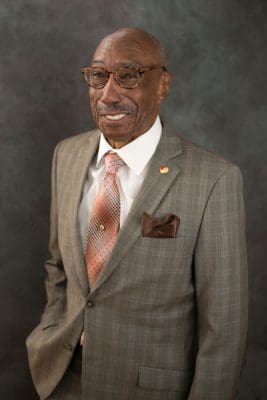
Click HERE to view Rev. Scott’s guided meditation during the service.
So my task for this evening … [Congregant: “Your privilege!” — Other congregants laugh] Oh; is that what it is? My privilege for this evening is to share my understanding of Brené Brown’s book on the quest for true belonging and the courage to stand alone: “Braving the Wilderness.”
It’s an interesting concept for somebody such as myself, who sort of thrives on “interiority,” if that’s a word. I’m more accustomed to turning inwardly than I am being overly concerned about the wilderness. But given the fact that I live in the wilderness, I think it’s probably a good idea to give it some thought.
So, I believe that belonging is important. But I don’t believe it’s the ultimate reason we are on this planet – just to belong. I believe we are also here to understand that belonging is much more than being a collective family or a group of people or a school or a church or whatever. Belonging – in the greatest sense of the universe, I believe – is that we are all one. Hence, we don’t have any opportunity to do anything other than belong. We belong to the human race, and the only way out of that is probably death. And that’s not something I’m interested in, and I hope you’re not interested in. But I think it’s important to look at this concept.
And I also love the idea that she talks about people are hard to hate close up – so lean in. And I never really thought about it from that context. I’ve always sort of always been a people person, if you will, albeit at points and times in my life, I was a pretty shy people person, but I still loved people. And I could always find myself with many of the elder people in my community, because they were safe, and I didn’t have to worry about having to get into a fight or get into an argument. And I could always ask them questions and get them engaged to the point where they’d share their life experiences with me.
And it gave me an opportunity as a youngster to sort of get some wisdom that helped me in many challenging circumstances and conditions – not just in grade school, but in middle school and in high school, and then later on in my growing life as I moved from one experience to the other.
I’m always reminded, though, of George Bernard Shaw’s often-used quote: that, “The biggest problem in communication is the illusion that it has taken place.” [Congregants laugh] And I find that to be true in my family life. I remember many times talking to my children and giving them lectures and telling them what they should do, and then finding out 20 minutes later that they had completely ignored me and done what they wanted to do. [Congregants laugh] And so, somehow communication was not taking place.
And I think the illusion that is in communication is because we’re sometimes unwilling to be honest in our communication. So, this evening, if something comes out of my mouth that’s a little confusing, I want you to ask me for clarity. And I can either clear it up or I can muddy the waters further. So let’s dive in.
I want to invite you to dive in both mentally and spiritually with this idea. People are hard to hate close up – move in. That’s quite a strong, almost supercharged process, because history suggests that our existence has been challenging. And many of us have kind of lived in points and times in our life when we’ve been in the wilderness, and it feels lonely. It feels isolated. And it sometimes makes one wonder whether the journey is worthwhile.
And this book is not just about communication with oneself; it’s also about communication with those around us, and how important that is to our overall well-being. And I think that’s the most important point that we want to take home from this evening. This concept of moving in is not just about forcing ourselves to be in communication with others. It’s about improving the standards of our existence.
So existentially, leaning in means making a conscious choice. It’s about making a conscious choice to embrace the anxieties that we face in life. It’s about making a conscious choice to embrace and to confront what we might consider sometimes as the absurdities of existence as we know it and as we understand it.
So, what do I mean by absurdities of existence? Well, here are just a few. Many times in life, we think when we’ve got challenges, we often think that they’ll go away if we just give them enough time. So, as a result of that, we end up ignoring them. And instead of going away, they grow bigger. And then we have to figure out how to create a situation that makes them shrink.
There’s a line in the Bible that says, “Time heals all wounds.” And to me, that’s another absurdity. Time doesn’t heal wounds. We have the responsibility for healing our wounds and participating in the healing of wounds that we’ve perpetrated on others. That’s how we get to the point of healing. And that requires an effort on our part.
Also, we have to look at the quality of the efforts that we make in trying to, quote, “heal our wounds.” Are we just making a casual observation about… the efforts? Are we just feigning interest in the efforts? Or are we truly giving the efforts all that we have in us? And I pose that question because I believe true interest requires an investment of our caring; an investment of our sincerity; and a true investment in our energy and everything that’s attached to our energy.
And I think that’s what enables us to have what I believe is a receptive soul: a soul that allows us to see beyond appearances and to accept everything that comes into our sphere of experience without placing our human judgments on it. And that’s a pretty tall order.
You ever ask somebody how they’re feeling? And before you can receive a response, they just kind of unload a ton of information about how they’re feeling or not feeling. And when that happens, if you have experienced that, have you ever asked yourself: “What happened here? Did I miss something?”
And the point of asking this question is one of communication. It’s amazing to me with all the scientific and psychological and philosophical and financial advancements that we’ve made in the world – and I’m a worldview person – that we still are challenged by many small everyday experiences.
And what’s behind that? Well, I believe it’s a part of our thinking process. In Charles Fillmore’s “Christian Healing” book, he wrote about a concept called “Thought Unity.” He said Thought Unity is the most important part of the Law of Mind Action. And as a result, we as individuals must understand the nature of this reality before we can demonstrate the power of the superconscious mind. In other words, before we can demonstrate the power of God in our lives.
He also said, more importantly, that this takes place among our associates, as well. And it creates a sort of imbalance in the energy when we’re interacting with each other. And it impacts our ability to understand and to sympathize with our thoughts and with their thoughts, because we are, in a sense, confused.
He said the same law is true in everything. He said particularly so in Divine Mind, because Divine Mind’s thoughts are drawn to and find expression in the minds of those who raise themselves to its thought standard.
This man was amazing in his ability to lay out a sentence that is probably much too long to express a simple idea. [Congregants laugh] But he said, this means that we must think of ourselves in the same way that God thinks of us in order to appreciate and to be able to receive good thoughts and God thoughts, and to bring forth the fruit or the results of those good thoughts.
So, it occurs to me that many times when we create distance between ourselves and others, it’s really just an illusion. Because you can be sitting in this room and you can be purportedly listening to me, and you can still be miles away in your consciousness. That’s how broad and how vast this experience of being alive is. And if you’re miles away in your consciousness, I’m okay with that. I love you anyway, because that’s who and what I want to communicate: that love and acceptance is the thing that enables us to grow and to unfold in life and to be our best selves.
And this leaning in idea is huge, because most of the time when we’re interacting out in society, we’re generally just coming to and fro. Sometimes we speak, maybe we nod and have acquaintances and so forth. But rarely do we understand that we’re passing fellow angels – fellow expressions of God – because most of the time we’re consumed with what’s in our minds and what we’re thinking about doing or have to do or choose to do or what have you. And what Fillmore is suggesting – that in order to be true to our own selves, we have to move beyond that process.
Growing up in a segregated community called Colored Town, where there was a white town and where there were colored schools and white schools, even as a child, I could somehow see through the charade of this idea of separation. And I often asked hard questions in school that the schoolteacher would tell me to go home and ask my parents. [Congregants laugh] And then I’d ask hard questions of my parents and they’d say, “Why didn’t the teacher tell you the answer to that?” Or, “Why didn’t the preacher tell you the answer to the question?”
And so, I took what I consider to be the easy way out for me, and that was just to interact with people to the very best of my ability. And in my youth, I spent hours sitting on front porches with people in their 60s, 70s, 80s, 90s … just talking and listening and growing and understanding.
And as I look back over that, I don’t deviate very far from that strategy today. Education has been a good resource for me. Reading has certainly been a good resource too. Experience has been an amazing tool. But the greatest resource I believe I have is probably the one I trust the least, and that is my innate wisdom. Many times the answer to something will come to me, but I’ll dismiss it because I don’t trust it. And a part of my journey over these past 83 years is learning more and more and more each day how to trust that innate wisdom.
I’ve never had a person enter my sphere of influence that I could say I hated. And I’ve had some pretty challenging experiences. I’ve had a pistol – loaded pistol – placed to my forehead. I’ve been placed in jail on trumped-up charges. I’ve been called many kinds of names — some names that the dictionary has to struggle to explain what they mean. But I haven’t found anything in my life that I couldn’t just kind of filter through my consciousness and let it go. Or anyone, for that matter, that I couldn’t just release and let go.
I believe hating requires the utilization of one’s sacred personal energy. There are many other good to great ways to expend that level of personal energy; many more productive ways.
I’ll share a Proverb – 4:23. It says, “keep your heart through prayer and study and application of God’s word.” The word, as I understand it, is love. Sure, there are circumstances, there are conditions, there are experiences, there are people that I love enough to keep my distance from. [Congregants laugh] And I think that’s what the power of choice is all about. That’s what the power of discernment is all about.
Life requires us to make wise decisions. And it requires us to make wise choices. And it’s never easy to know the wisdom of making those decisions and choices. If your ego won’t allow you to trust in your own Higher Power, that’s a problem. It’s a real big problem. And that’s what the journey in spirituality is about. It’s about learning to trust in your own Higher Power.
In the traditional church, they talk about dying and going to heaven. That may be; I’m not sure about all of that. What I’m interested in is the nasty now and now. How can I function today: alive, alert and awake and enthusiastic about life? How can I function today and feel good about that? And many times that’s hard for all of us. I highly believe that prayer helps us move beyond that hardness.
Here’s one of my songs that’s moving through my head: Don’t let me be misunderstood. It was a song originally written by Bennie Benjamin and Horace Ott, and I believe another guy by the name of Sol Marcus. And it was originally written for Nina Simone, who recorded the first version back in 1964. I used to listen to it over and over again. “Please don’t let me be misunderstood.”
And I think back over my journey through all of the challenges and joys and achievements and accomplishments and failures that have experienced over the years. And that’s very important to be able to have something like that – to be mindful that this, too, shall end, and things always get better.
I want to share a story with you that is kind of near and dear to my heart. Shortly after we finished building the church in Nashville, I remember sitting in my office, just kind of enjoying the experience. A beautiful piece of property, and I often could sit there and just look out over the woods and think to be able to create sermons for the week. I spent 16 years doing two services a Sunday; never delivered the same sermon. I just had that ability to just sit and think and create. It was one of the most inspiring and rewarding experiences of my life.
So, we built a building. Three or four years passed. Got a call one day. The secretary said it was the chief of police. The chief of police? For what? She said, “He wants you to call him.” So, I called him. And he said, “Pastor Scott,” he said, “I’ve got a job for you.”
And I said, “Chief, I have a job.” [Congregants laugh]
He said, “No; this is a different kind of job.”
I said, “Tell me more.”
He said, “If you’ve kept up with the news, you’ve seen that one of my officers shot and killed a lady over in the projects.” And he said, “The community is outraged.” And he said, “So am I.” And he said, “What I’d like to invite you to do is to participate in a training process for our police department.”
And I said, “Well, I don’t know anything about training police departments.”
He said, “This is not about training police. It’s about giving them some spirituality.”
I said, “Oh. I might be interested in that.”
He said, “Good! Come in and talk to me.”
All right, I went in and talked to him. We sat down and he told me all about what he expected: once a week for a year.
I said, “Chief, are you planning on paying me for this?” [Congregants laugh]
He said, “No; this is a gift to the community.” Okay; I’m a community servant. So I talked to my board about it, and they agreed.
Once a week, sitting in a room of close to 200 police officers. And we talked about spirituality and real-life experiences and expectations. The reason we talked about expectations is because, as I said or if I didn’t say it, one of the officers had shot an unarmed lady. And naturally, the community was outraged.
So, we’re sitting in there, and me, the chief, and a couple of other officers are sitting in the room, and we get into discussions. You know, I’m pretty solid on what I believe. Taking a human life; that’s a major decision. And to take the life of someone who is unarmed and, at the very least, harmless to me is a pretty stretch of power.
So apparently, the police department decided that that was indeed the case, and the officer was released. But in his releasing, the other officers began to wonder whether or not they would be released for every infraction that they participated in. And of course, rational-minded people would probably know that wouldn’t be the case, but they had those concerns. So, we’d sit and they’d pose a question and I’d try to answer it. And sometimes defer to the chief and he would answer it. Sometimes one of the other officers would answer it, because they had more experience. My experience is just in dealing with people in general.
But one day this young officer stood up and she said, “Pastor Scott.”
I said, “Yes.”
She said, “Do you believe that a single mother leaving her child or baby at home at night, going out on a date with some guy is a good thing to do?”
And I said, “Of course not.”
And she said, “Well, why do young black women do that?”
And I said, “Oh, hold on a minute. I didn’t know this was a black or a white thing. The person who did this happened to be black. But I know lots of women who have babies, and none of them that I know would leave their child alone in the house and go out on a date. So, let’s kind of lower the temperature and understand that this is not a black-white problem. This is an issue of morality, just as the shooting of an unarmed person is an issue of morality. It’s an issue of the law. No one that I know of can go around shooting people that are unarmed without feeling like they’re in the way of harm themselves.”
“So, what these meetings are about is coming to a point of understanding that we’re all servants. We’re all here to serve one another. And if we can learn that, then we will have moved forward in our lives.”
Long story short, up until maybe a year before last, there had never been another officer shooting of an individual in Nashville that I’m aware of. Chief Casey retired last year. But he was an amazing human being, because he understood the nature of being alive and being human in the world that we live in, which is very complex and challenging at times.
And so, the lesson in that, I believe, for all of us, is learning to see beyond what is taking place in our communication sometimes, particularly in the communication that’s taking place in our country today. It’s hard. It’s hard to see. It’s hard to digest. But at the same time, the more we lean into discussions, the more we open ourselves up to expand our consciousness and to be better people … and hence create a better world.
And I can truly say, in my 84 years of existence, this time is the best I’ve seen. Because my value is based on my desire to be an instrument of love and humanity. And that’s our biggest challenge. Not how much money we can make, not how many houses we can buy, not how many factories we can create, not how much traffic we can generate. It is to create the best world that we possibly can. And it’s complex. I don’t want to simplify it. It’s complex. But love – just leaning into it every opportunity we get – will carry us through. I believe that. I have to believe it. I want to believe it. And I choose to believe it. And I challenge you to take it on. I don’t have anything else to say.